Top Courier Services in Gujarat
In this online selling era, where a click can convert into a customer, the real game-changer is not just what you sell […]
 Exciting Offer: ₹600 FREE Shipping Credits on 1st Recharge of ₹1000. Code: FLAT600 *T&C ApplyView More Offers WELCOME BONUS: Enjoy FREE Inventory Storage for 15 Days. *T&C ApplyGet Started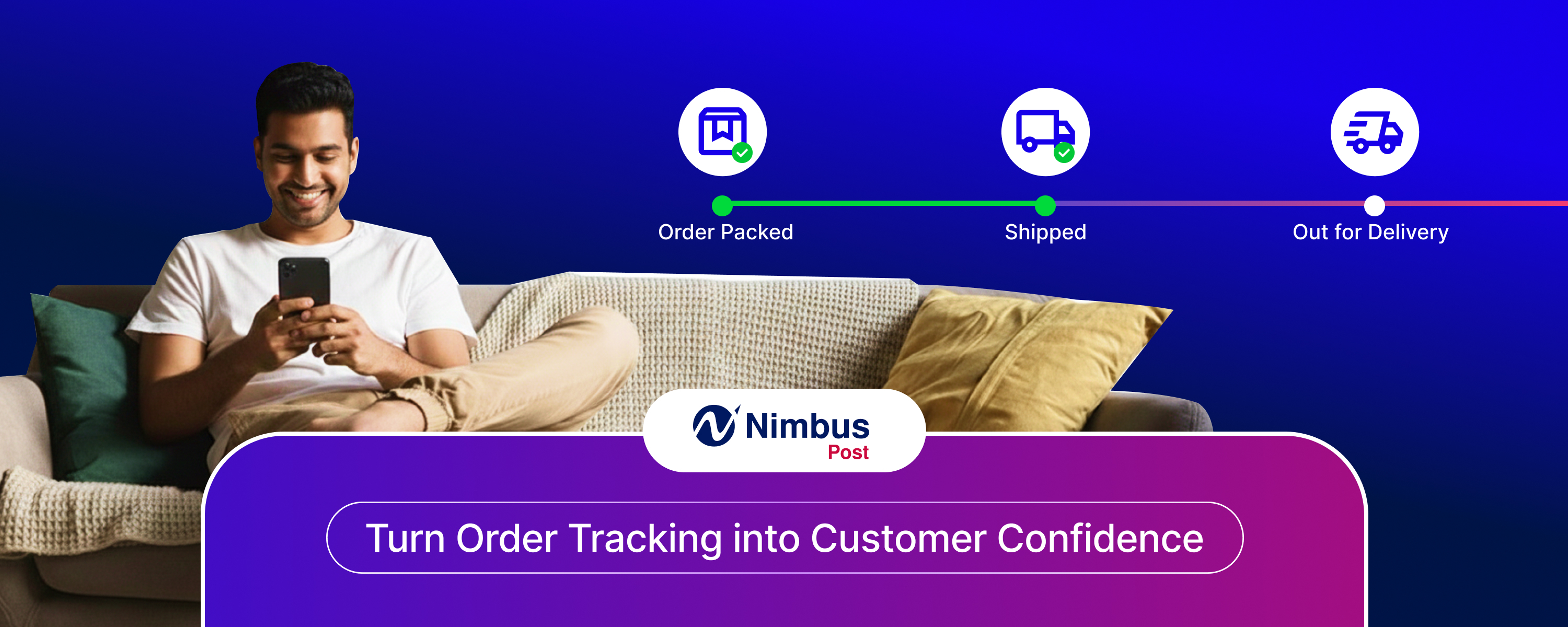
eCommerce sellers face fierce competition today. Customers expect more than just fast shipping. They demand full visibility into their orders, including dispatch status, scheduled arrival times, delay notifications, etc. Real-time tracking delivers that transparency, reducing anxiety and building lasting trust.
Think about your last online purchase. Did you refresh the tracking page obsessively? Most buyers do. A recent survey reveals that 72% of eCommerce customers check their order status daily. Real-time tracking turns that frustration into confidence. It not only helps you to track orders but also to stand out, reduce support overload, and drive repeat sales.
Let’s look into the secrets of real-time tracking (or live tracking) that you, as a seller, should know to build confidence in your customers.
Real-time tracking allows both sellers and customers to know exactly where a package is at any time, making the delivery process more reliable and efficient. It helps sellers identify delays or problems early so they can fix them quickly. For customers, it provides peace of mind and reduces the need to contact support. Let’s understand why real-time tracking matters in more detail.
Live order visibility drops “Where’s my order?” calls significantly. Customers who are able to track their orders in real time are less likely to contact your support team with queries, thereby reducing incoming support volume and avoiding miscommunication.
Informed customers rate you higher, driving your Net Promoter Score and boosting your brand value. When customers can track their orders live, they feel informed and in control. They know exactly when to expect their package, making the overall shopping experience smoother and more satisfying.
Visibility into orders helps you maintain trust with customers. Buyers bond better with brands that keep promises. Transparency offers psychological comfort to the buyer. When consumers can view consistent progress updates rather than vague “in transit” messages, they feel more confident in your brand.
Spot a delay at the hub? You can reroute before it escalates, fix issues proactively, and save your reputation. Sellers who use a modern tracking/dashboard system can spot delays and exceptions (e.g., “stuck in transit,” “delayed”) in advance and immediately coordinate with courier partners to reroute shipments or arrange redeliveries. These actions, proactively communicated to the buyer, avoid escalation.
Tracking systems generate logs, exceptions, dwell times (the duration a shipment stays idle at a specific location), and delay statistics. With time, you can analyze and identify which courier partners or routes are most likely to fail and adjust accordingly.
Besides tracking systems, with data insights and advanced tools like smart courier allocation, you can choose winning couriers for every shipment and improve delivery performance over time. For example, there’s a D2C clothing brand in Mumbai. They switched to real-time tracking. Support tickets fell 35% in three months. Customers left glowing reviews praising the updates. That’s the power you can harness.
Ready to level up? Follow these proven secrets. Implement one at a time and watch trust and sales climb.
Online sellers depend on multiple courier partners to cover different regions. These couriers have their own tracking links and formats, forcing both sellers and customers to visit various websites to check delivery status.
An aggregator dashboard solves this problem by bringing all tracking updates into a single place. You can pull live updates from all carriers into one screen, and customers receive a consistent, easy-to-understand tracking experience. This saves time and eliminates confusion caused by switching between multiple tracking systems.
Generic courier pages scream “third party.” Instead of sending a generic courier tracking page, you can direct users to a tracking page on your subdomain with your logo, colors, and messaging. This makes customers trust that information, as it is associated with your brand, not just the courier.
Picture this: A buyer clicks your branded link. They see “Your Sneakers are in Pune Hub – ETA Tomorrow!” with your store’s vibe. It reinforces your brand every step. Loyalty deepens without extra marketing spend.
Basic tracking shows only status changes like “Dispatched,” “In transit,” or “Out for delivery.” However, granular tracking updates paint the full picture by providing:
Sharing these updates with the customers keeps them informed and shows that you really care about their order.
History predicts the future by feeding past courier data into smart algorithms. Predictive tracking means using historical courier data to estimate when a given parcel will reach the customer. For example, the system might say, “Expected delivery between 4 pm and 6 pm today.”
Some advanced systems can even update this estimate in real time as new data arrives (e.g., if there are delays along the way, your customers get updated instantly: “Pushed to 7 PM due to traffic”). This allows you to inform customers proactively, keeping them reassured that their order is on the way and will be delivered.
Don’t make buyers hunt for updates. It is important to share the mentioned updates with the customer through push notifications via SMS, email, or WhatsApp:
Each notification to the customer should include a tracking link and your brand name (not just the courier). You can set the above-mentioned events in your tracking system, and it will automatically send all the updates to the customer.
Overpromising and underdelivering is a recipe for bad reviews. Show your customers a realistic estimated delivery date (EDD) whenever they place an order. This date should be clearly visible on the order tracking page and in the push notifications.
Also, the real-time tracking updates should be in line with the promised delivery date. It keeps the customers confident and prevents frustration even if there’s a small delay.
Perfection is rare in logistics. Even after you have taken extensive care to build a seamless process, delays and exceptions may still happen. Some best practices to handle exceptions are:
Raw data always beats guesswork. Analytics from advanced tracking systems allows you to improve performance. The system should highlight:
By reviewing these insights regularly, you can identify patterns and take corrective actions like dropping non-performing partners, renegotiating service-level agreements (SLAs), or adjusting route allocations. Over time, these data-driven improvements help you refine your logistics strategy and strengthen customer trust.
Many buyers, especially in India, track their shipments on mobile phones and on slower networks. So, it is important to:
Couriers can sometimes change how their tracking works due to technological advancements and customer demand, which can cause errors. One glitch is enough to break your flow, which is why it is important to periodically test the tracking experience end-to-end (from order placement to final delivery).
Master real-time tracking by turning logistics into your secret weapon. NimbusPost’s real-time order tracking system unifies couriers in one smart dashboard. Get live updates, predictive ETAs, and analytics. Empower your team to delight buyers and scale effortlessly.
Real-time tracking is about visibility, building trust, improving efficiency, and creating a superior delivery experience. Using advanced order tracking systems, sellers can access live updates, predictive insights, and detailed analytics across multiple couriers, all from a single dashboard. By simplifying tracking and communication, NimbusPost empowers eCommerce businesses to deliver goods with confidence and turn logistics into a true competitive advantage.