A Seller’s Guide to Writing Product Descriptions
Your words are your salesforce. Every product lives or dies by the stories that are told about it. Yes, we’re talking about […]
 Exciting Offer: ₹600 FREE Shipping Credits on 1st Recharge of ₹1000. Code: FLAT600 *T&C ApplyView More Offers WELCOME BONUS: Enjoy FREE Inventory Storage for 15 Days. *T&C ApplyGet Started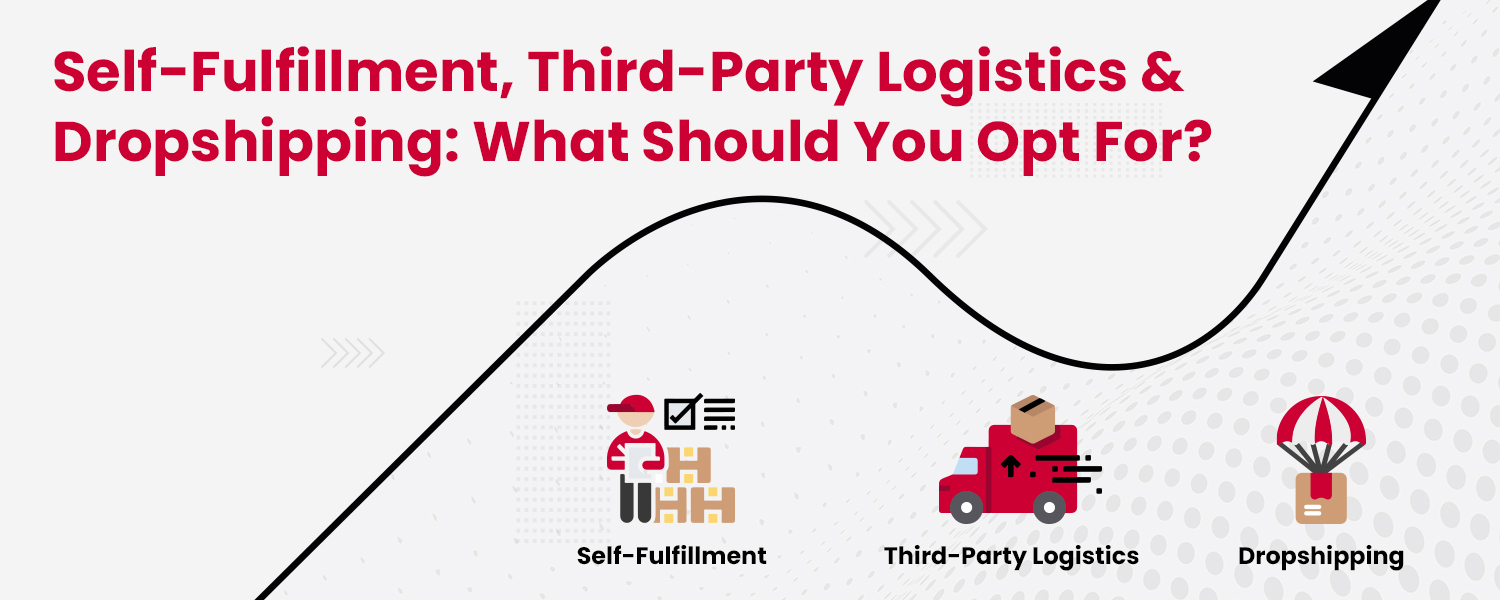
Sourcing of raw material– checked. Product development–checked. Building an eCommerce website–checked. Creating a marketing campaign–checked. You’ve done everything from sourcing to listing your product online, and you’re getting orders. But the real business starts by fulfilling the orders! You got the order, but if it is shipped late or faulty, it is a dent in your brand’s reputation and customer service. So 3rd-party fulfillment or drop shipping fulfillment, which strategy to opt for?
Choosing the right fulfillment strategy for your eCommerce business can be daunting, but it’s also essential. After all, your fulfillment process can have a significant impact on your customer’s experience, as well as your bottom line.
In this blog, we’ll take a closer look at each option and help you decide which is best for your business. So get ready to wave goodbye to fulfillment confusion and hello to streamlined success.
Third-party fulfillment is a popular option for eCommerce sellers who want to outsource their order fulfillment process. According to the study, the exponential growth of eCommerce, 25% in 2020, is leading to an increase in demand for 3PL services. In 3PL, sellers partner with a third-party fulfillment provider who handles all aspects of order fulfillment on their behalf instead of managing their warehouses and logistics. This is the best way to scale up operations, as it allows sellers to focus on their core competencies while leaving the fulfillment process to the experts.
With third-party fulfillment, businesses can take advantage of the latest technologies and processes, as well as the expertise of fulfillment professionals, without the need for significant upfront investment.
For example, a small eCommerce retailer sells handmade jewellery online. As the business grows, the owner realizes that managing the fulfillment process in-house is becoming too time-consuming and expensive. Therefore, they decide to partner with a third-party fulfillment provider to handle all aspects of order fulfillment.
Now, when a customer places an order on the retailer’s website, the order and shipping details are automatically transmitted to the third-party fulfillment provider. The provider has a network of warehouses and uses advanced software to optimize the inventory management, packaging and shipping process. The provider picks the ordered items from their warehouse, packs them in a branded box, and ships them directly to the customer. That way, the retailer does not need to worry about managing inventory, packing orders, or handling returns. Instead, they can focus on their core competencies, sourcing, and marketing, while leaving the fulfillment process to the experts.
Drop shipping fulfillment is a type of order fulfillment process where a retailer does not keep goods in stock but instead transfers customer orders and shipment details to either the manufacturer, another retailer, or a wholesaler, who then ships the goods directly to the customer. This allows the retailer to sell a wide range of products without having to worry about inventory management or warehousing. The retailer only pays for the goods when they are sold, rather than having to invest in inventory upfront. Dropshipping fulfillment is a cost-effective way for retailers to expand their product offerings and reach a wider market without incurring the expenses associated with holding inventory.
For example, a customer visits a retailer’s website and places an order for a new pair of shoes. The retailer does not keep the shoes in stock but instead has a partnership with a shoe manufacturer to fulfill orders for its products. When the customer places the order, the retailer sends the order and shipping details to the manufacturer. The manufacturer then packs the shoes and ships them directly to the customer. The retailer does not need to worry about inventory management or warehousing, and only pays the manufacturer for the shoes once they have been sold. The customer receives their order directly from the manufacturer without any involvement from the retailer. This allows the retailer to offer a wide range of products without having to invest in inventory upfront.
As a seller, you have a few different options when it comes to fulfilling orders for your products, such as third-party fulfillment and drop shipping fulfillment. While both options can be effective in different situations, they do have some key differences that you should be aware of.
Third-party fulfillment involves partnering with a third-party provider to handle all aspects of order fulfillment on your behalf. This includes tasks such as picking, packing, and shipping orders, as well as managing inventory and returns. However, it can also be more expensive than some other options, as you’ll need to pay for the services of the fulfillment provider.
On the other hand, drop shipping fulfillment involves transferring customer orders and shipping details to either the manufacturer, another retailer, or a wholesaler, who then ships the goods directly to the customer. As a seller, you don’t need to worry about inventory management or warehousing, as you only pay for the goods when they are sold. Dropshipping can be a cost-effective way to sell a wide range of products, but it can also be more complex to set up and manage, as you’ll need to coordinate with multiple partners.
Another visible difference between third-party fulfillment and drop shipping fulfillment is the business purpose of partners.
Dropshipping fulfillment aims to allow eCommerce sellers to offer a wide range of products without having to invest in physical inventory or handle the logistics of storing and shipping products themselves. In a nutshell, the seller, which in this case is you, is a marketer of supplier or manufacturer’s goods. Therefore, your partner (manufacturer) has a broader purpose than just fulfillment, like producing goods, sourcing raw materials, etc., which is different from a third-party fulfillment partner.
Third-party fulfillment companies, unlike drop shipping suppliers, also provide customer services like item tracking, return management, warehouse management, customer service, etc. their purpose is just fulfilling the orders of their partners.
In dropshipping fulfillment, the supplier or wholesaler holds the inventory and ships the products directly to the customer. The retailer does not own any inventory or stocks. In third-party fulfillment, the fulfillment company holds the retailer’s inventory in the warehouses and ships it to the customer on behalf of the retailer. Here the eCommerce retailer is the owner of the product.
In dropshipping fulfillment, the supplier or wholesaler is responsible for shipping the products to the customer. In third-party fulfillment, the fulfillment warehouse is responsible for shipping the products to the customer. They also specialize in packaging and last-mile delivery.
When using a drop shipping business model, the drop shipper is responsible for manufacturing or distributing products to a wholesale market and shipping orders to customers on behalf of the eCommerce retailer. However, drop shippers typically do not provide additional fulfillment services, such as managing returns or handling customer service requests. This is the responsibility of the retailer to provide robust customer service and handle any problems that may arise between the manufacturer and the customer.
On the other hand, a third-party fulfillment provider (3PL) is a specialized company that offers a range of fulfillment services, including storage, picking, packing, and shipping. In addition to these core services, 3PLs may also offer additional services such as managing returns, handling customer service requests, and providing expert advice to help stores and businesses ship orders efficiently and cost-effectively. 3PLs are focused on providing comprehensive fulfillment solutions for businesses and, as such, may offer a wider range of services than drop shippers
Both drop shipping fulfillment and third-party fulfillment involve outsourcing the storage, picking, packing, and shipping of products to another company.
In dropshipping fulfillment, you act as a middleman, taking orders from customers and forwarding them to the supplier for fulfillment. The supplier or wholesaler holds the inventory and ships the products directly to the customer on behalf of the eCommerce seller. In contrast, in third-party fulfillment, the seller owns the inventory and stores it with a specialized fulfillment company responsible for picking, packing, and shipping the products to the customers on behalf of your business.
Drop shipping fulfillment involves the supplier or wholesaler holding the inventory and shipping. In contrast, third-party fulfillment involves the eCommerce seller owning the inventory and storing it with a fulfillment company for fulfillment.
Drop shipping fulfillment can be a cost-effective option if you want to avoid investing capital in inventory. This is because you only pay for the products you sell rather than having to purchase inventory upfront. However, if you can afford to carry inventory and want to handle your storage and logistics professionally and efficiently, third-party fulfillment may be a better choice. This allows you to outsource the logistical aspects of fulfillment to a specialized company, freeing up time and resources that can be used to focus on other aspects of your business.
If you want to offer fast shipping to customers from multiple locations, a third-party fulfillment provider (3PL) can be helpful. 3PLs often have multiple fulfillment centres located in strategic locations around the country or even internationally, allowing them to ship orders to customers from the fulfillment centre closest to the customer. This can reduce shipping times and costs. In contrast, drop shippers may only have a single location, which may need to be optimally situated for shipping to customers.
If you are uncertain about your future sales and don’t want to invest in setting up and maintaining your own warehouse space, third-party fulfillment can provide flexibility. You can scale up or down your warehouse space as needed, paying only for the space you use. On the other hand, drop shipping can help manage uncertainties in the sales performance of specific products. Instead of maintaining large inventories, you can place orders with the drop shipping company as orders come in through your website. This allows you to test the demand for new products without incurring the risk of carrying large amounts of inventory.
Third-Party Fulfillment Can Provide Shorter Ship Times For Your Customers
One of the main advantages of third-party fulfillment is that it can help you offer faster shipping times to your customers. This is because fulfillment companies often have multiple fulfillment centres located strategically around the country or internationally. This allows them to ship orders to customers from the fulfillment centre closest to them, reducing shipping times and costs. In contrast, if you handle fulfillment in-house, you may only have a single fulfillment location, resulting in longer shipping times for customers far from your fulfillment centre.
Your Storage Expenses Are Variable
Another advantage of third-party fulfillment is that it can help you save money on storage expenses. This is because you only pay for the storage space you use rather than renting or building your own warehouse or storage facility. This can be especially useful for businesses that experience fluctuations in demand, as it allows you to scale up or down your storage needs as needed. This can help you save money on storage costs while still being able to meet the needs of your customers.
Your Capital Is Tied Up In Your Inventory
One potential disadvantage of third-party fulfillment is that your capital may be tied up in your inventory. This is because you need to purchase the inventory upfront and then store it with the fulfillment company. This can tie up a significant amount of capital, which may not be available for other purposes. This can be especially challenging for businesses with limited capital or those that need to use their capital for other purposes.
You Are Responsible For Your Inventory
Another potential disadvantage of third-party fulfillment is that you are responsible for your inventory. This means that you need to manage your inventory levels, monitor stock levels, and ensure that you have enough inventory to meet customer demand. If you don’t manage your inventory effectively, you may experience stock shortages, which can lead to lost sales and disappointed customers. This can be especially challenging for businesses that are new to eCommerce or those that are not experienced in inventory management.
Easier To Expand The SKU Breadth
One of the main advantages of drop shipping fulfillment is that it can be easier to expand the breadth of your product offerings. This is because you don’t need to invest in physical inventory or handle the logistics of storing and shipping products yourself. Instead, you can partner with multiple suppliers or wholesalers who hold the inventory and ship the products directly to your customers on your behalf. This can allow you to offer a wide range of products without having to invest in the infrastructure and overhead required to store and ship them yourself.
You Can Take Risks On Untested Products
Another advantage of drop shipping fulfilment is that it allows you to take risks on untested products without incurring the risk of carrying large amounts of inventory. This is because you only order the products from the supplier or wholesaler after you have received an order from a customer. This means you don’t have to invest in large quantities of inventory upfront, which can be risky if the product doesn’t sell as well as expected. Drop shipping fulfillment allows you to test the demand for new products without incurring this risk, which can be especially useful for businesses trying out new product lines.
You Have Less Control Over The Availability Of Your Products
One potential disadvantage of drop shipping fulfillment is that you need more control over the availability of your products. This is because you are relying on the supplier or wholesaler to hold the inventory and ship the products to your customers on your behalf. If the supplier or wholesaler experiences delays or stock shortages, you may not be able to fulfil orders as quickly as you would like, which can lead to disappointed customers. This can be especially challenging for businesses that rely on fast shipping times to compete with other sellers.
Shipping Can Be Slower And More Expensive
Another potential disadvantage of drop shipping fulfillment is that shipping can be slower and more expensive. This is because the supplier or wholesaler is responsible for shipping the products to your customers, who may have different shipping networks or discounts than you do. This can result in longer shipping times and higher shipping costs, which can be passed on to your customers. This can be especially challenging for businesses that rely on fast shipping times or low shipping costs to compete with other sellers.
Deciding between third-party logistics (3PL) and drop shipping for your eCommerce business is difficult, as both options have their advantages and disadvantages.
3PL or drop shipping fulfillment. Ultimately, the best option for your business will depend on your specific needs and goals. Today, eCommerce businesses utilize logistics aggregators to decide which type of order fulfillment process is ideal for them and which logistics company can successfully deliver their products to customers meeting their expectations. For example, you can go with NimbusPost – one of the best aggregator options in the market. Their dashboard includes features like automated non-delivery reports, order booking, performance tracking, a verification system, and much more.