Top 20 Low Investment Business Ideas for Women in India [2026]
There was a time in India when there were only a few women-driven initiatives in the Indian business set up like Lijjat […]
 Exciting Offer: ₹600 FREE Shipping Credits on 1st Recharge of ₹1000. Code: FLAT600 *T&C ApplyView More Offers WELCOME BONUS: Enjoy FREE Inventory Storage for 15 Days. *T&C ApplyGet Started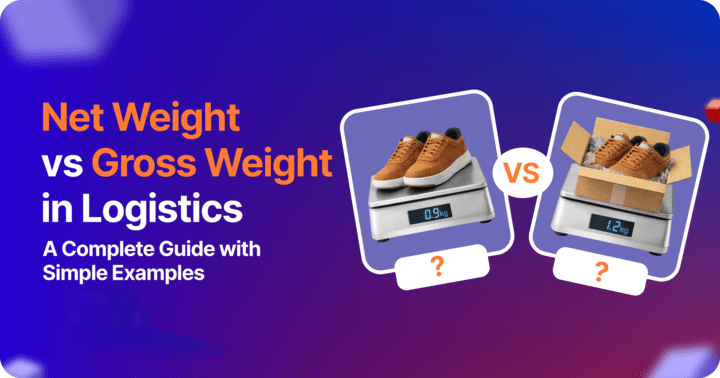
In logistics, few things look as simple as weight, yet cause so many problems later. It is one of the first details recorded for a shipment and also one of the most commonly misunderstood.
For many businesses, weight feels straightforward. You weigh the product, print the label, and send it out. In practice, though, weight is not just one number. It is defined differently at different points in the supply chain, and those differences directly affect shipping costs, courier billing, compliance, and delivery reliability.
As eCommerce grows and shipping networks become more complex, the gap between a product’s weight and a shipment’s weight starts to matter. Small misunderstandings here can lead to billing disputes, surprise charges, delayed payouts, and margin loss that often show up only once volumes scale.
Understanding the difference between net weight and gross weight is therefore not just an operations issue. It matters for eCommerce sellers, supply chain teams, and anyone responsible for calculating shipping costs correctly.
This guide explains what net weight and gross weight mean in logistics, how they differ, and why getting this right helps prevent the quiet cost leakage over time.
Weight is not just a technical detail in logistics. It sits at the center of how shipments are priced, handled, and moved.
Couriers use weight to calculate charges, plan vehicle loads, decide handling needs, and meet transport rules. In many cases, it also affects routing choices and how space is shared across delivery networks.
Because of this, even small mistakes can have an outsized impact. A difference between declared weight and what a courier measures can lead to higher charges, billing disputes, rebilling after delivery, or delays while the issue is resolved. On its own, this may seem manageable. At scale, it quietly eats into margins.
For eCommerce and D2C businesses, weight issues often show up late. Extra charges surface during invoice checks or payout cycles, after the cost has already been incurred, and disputing it takes additional time and effort.
As shipment volumes grow across regions, couriers, and fulfillment locations, weight accuracy stops being a manual task. It becomes a system requirement. That is why clearly understanding the difference between net weight and gross weight, and knowing where each one applies in the shipping process, is essential.
This focus on accuracy is reflected globally. The World Bank’s Logistics Performance Index consistently links reliable documentation, shipment handling, and measurement accuracy with stronger logistics performance, lower costs, and faster delivery timelines. Errors in basic inputs like weight directly weaken predictability and efficiency across the supply chain.
Net weight is the weight of the product itself, without any packaging. It answers a simple but important question. How much does the actual product weigh?
Net weight refers only to the usable or consumable part of a product, which is what the customer is paying for. This is why net weight appears on product labels and is regulated in most markets.
Example:
From a customer’s point of view, net weight is what matters most. It tells them exactly how much product they are getting, regardless of how it is packaged or shipped.
Gross weight is the total weight of a shipment once it is fully packed and ready to be moved. It answers a different question than net weight. How much does the entire shipment weigh at the time of transport?
Gross weight includes everything that travels with the product, not just the item itself but also all layers of packaging and protection.
Example:
The total shipment weighs 1.5 kilograms.
That is the gross weight.
In logistics, gross weight is what couriers and transport providers actually use. Shipping charges, vehicle load planning, handling rules, and safety compliance are all based on gross weight, or on volumetric weight if that is higher.
This is where many shipping cost surprises begin. Customers see net weight on the product label, but logistics systems calculate costs using gross weight. If the difference is not understood or tracked properly, it leads to higher charges, billing disputes, and margin loss.
That is why clearly separating net weight from gross weight is critical for accurate shipping cost calculation and smoother logistics operations.
Understanding the difference between net weight and gross weight becomes easier when you see how they are used.
| Aspect | Net Weight | Gross Weight |
| Definition | Weight of the product only | Product + all packaging |
| Used for | Product labeling, compliance | Shipping and freight billing |
| Includes packaging | No | Yes |
| Relevant to customers | Yes | Usually no |
| Relevant to couriers | No | Yes |
Many businesses assume that net weight is what matters for shipping. In reality, logistics systems work on gross weight. This mismatch is one of the most common reasons shipping costs go wrong.
When shipping costs are calculated using net weight instead of gross weight, the final courier bill is almost always higher than expected. Packaging, outer cartons, and protective materials add weight that was never accounted for.
Over time, this gap:
What feels like a small difference per order turns into a significant cost leak as volumes grow.
Couriers remeasure shipments at different points in the delivery journey. When the declared weight does not match the measured gross weight, disputes are triggered automatically.
These disputes often:
In most cases, these are not courier mistakes. They come from incorrect weight assumptions made at dispatch.
For regulated or cross-border shipments, weight figures appear across invoices, shipping labels, manifests, and transport documents. Mixing up net weight and gross weight creates inconsistencies between these records.
This increases:
Even when the product itself is correct, inconsistent weight data can slow shipments down.
When teams focus only on net weight, packaging efficiency often gets ignored. Overpacking, inconsistent box sizes, or unnecessary fillers increase gross weight without improving protection.
The result is higher shipping costs with no real benefit. An avoidable expense that adds up across thousands of shipments.
Confusing net weight with gross weight rarely causes one obvious failure. Instead, it creates a pattern of small, repeatable inefficiencies that quietly become expensive over time.
In 2026, shipping pricing models have become more granular.
Couriers now factor in:
Even a small increase in gross weight can push a shipment into a higher pricing slab. For high-volume eCommerce businesses, an extra hundred or two hundred grams per order can add up to a meaningful cost difference across thousands of shipments.
This is why accurate gross weight calculation and smarter packaging choices are so important for keeping shipping costs under control.
If the brand calculates shipping assuming 250 grams, courier charges will consistently exceed expectations.
To manage net weight vs. gross weight correctly, businesses should:
Weight accuracy should be treated as part of logistics infrastructure, not a one-time setup task. Systems, discipline, and cross-team clarity are what prevent small weight gaps from turning into recurring cost disputes.
As shipping volumes grow, keeping weight accurate becomes much harder to manage by hand. Different couriers, warehouses, and packaging standards introduce small variations that spreadsheets and manual checks simply cannot catch consistently.
Modern shipping platforms help businesses do a few important things well
This kind of visibility turns weight from a problem you react to into something you can actually control.
At NimbusPost, this focus on accuracy and transparency helps eCommerce brands cut down avoidable weight disputes and gain tighter control over shipping costs as they scale, without adding more manual work for their teams.
Net weight and gross weight may sound like basic logistics terms, but the difference between them has a real financial impact.
Net weight defines what you sell. Gross weight defines what you pay to ship.
Businesses that understand and manage this difference enjoy more predictable shipping costs, smoother operations, and stronger margins. Those who ignore it often find themselves dealing with unexplained charges, repeated disputes, and slow, silent cost leaks.