The ODOP Advantage: How Local Brands are Dominating eCommerce Niche Markets
Gone are the days when local arts were confined to geographical locales. In the wake of eCommerce, the ODOP initiative emerged as […]
 Exciting Offer: ₹600 FREE Shipping Credits on 1st Recharge of ₹1000. Code: FLAT600 *T&C ApplyView More Offers WELCOME BONUS: Enjoy FREE Inventory Storage for 15 Days. *T&C ApplyGet Started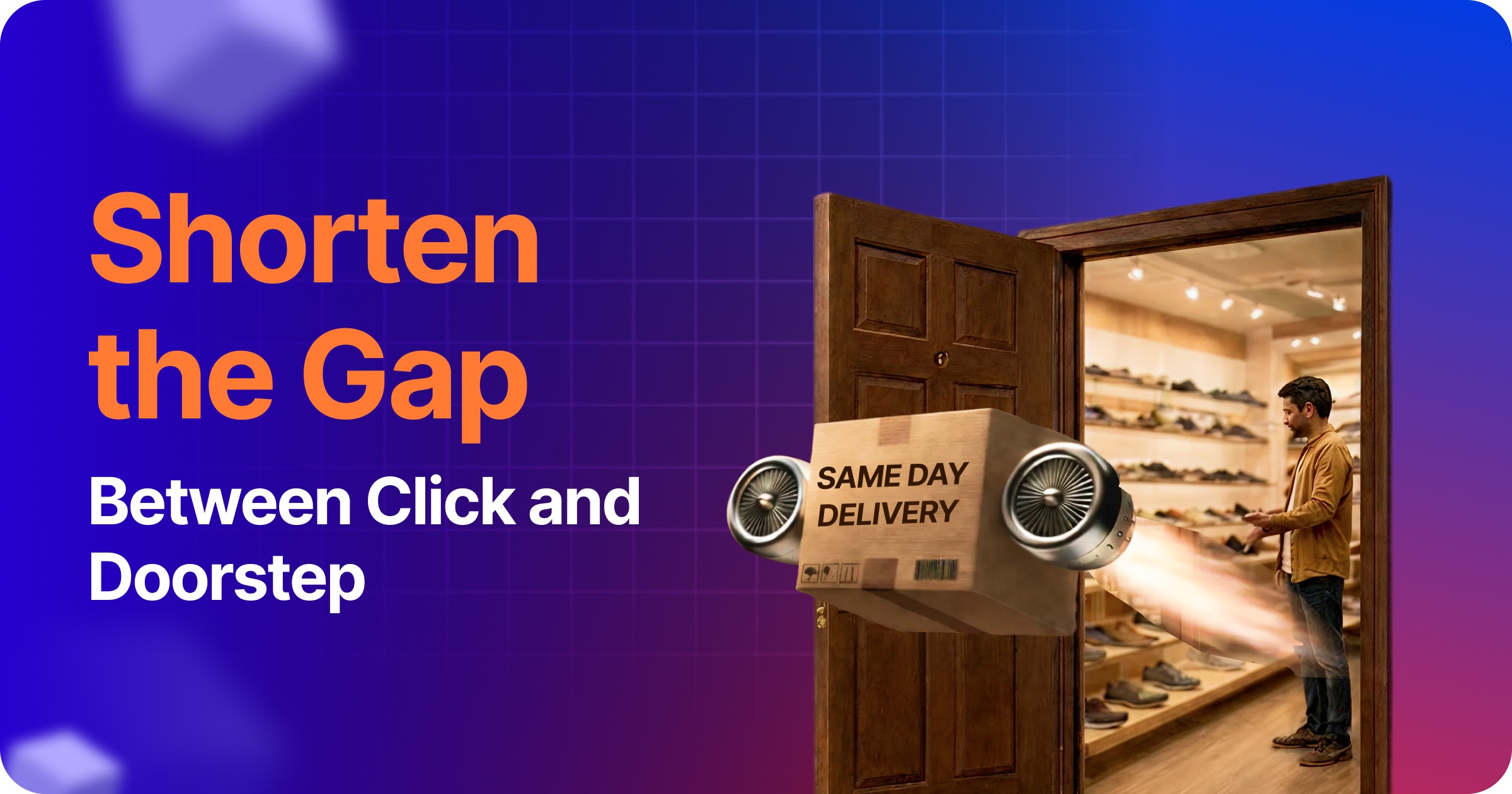
There was a time when waiting a week for an online order felt completely normal. Then, 2-day delivery reshaped what convenience meant. Next-day delivery raised the bar again.
In 2026, the bar has moved once more. In tier-1 cities, customers increasingly expect products to arrive the very same day they place an order. This shift did not happen overnight. Faster digital payments, more localized warehousing, and the growth of quick commerce platforms have gradually trained buyers to think in hours instead of days. What was once promoted as express is now simply the benchmark.
For eCommerce brands, especially those competing in D2C or direct-to-consumer markets, this change goes beyond transit speed. Delivery timing now affects purchase confidence. The shorter the wait, the fewer the doubts. The longer the delay, the more space there is for hesitation or comparison.
Same-day delivery protects buying intent. It reduces the vulnerable window between checkout and fulfillment, the period when cancellations, second thoughts, or competitor browsing often happen.
It may have started as an operational upgrade, but it has evolved into a growth lever. Brands that are structured for same-day parcel delivery do more than move orders quickly. They reduce the gap between intent and fulfillment, shorten the customer’s decision cycle, and reinforce trust when it matters most.
This article breaks down what same-day delivery service means in 2026, how expectations have evolved, and why structured same-day fulfillment is becoming central to sustainable eCommerce growth.
Customer expectations have moved faster than most operational systems. A decade ago, delivery happened after the purchase decision. Today, it actively shapes that decision.
Large marketplaces made fast fulfillment normal in major cities, and quick commerce pushed expectations even further by shrinking delivery windows from days to hours.
This change is measurable. According to a Capgemini Research Institute report in 2025, the share of shoppers who consider 2-hour delivery an important service attribute rose from 34% to 65% in just two years.
The shift we see in 2026 is not a temporary spike driven by promotions or seasonal demand. It is structural. Delivery speed is increasingly seen as a signal of product readiness, operational strength, and brand reliability.
Following 3 behavioral shifts define this moment:
Long delivery windows create mental space for doubt. A three-to-five-day timeline gives customers time to reconsider, compare alternatives, or question urgency. That delay creates a vulnerability window where purchase intent weakens.
Fast delivery feels like readiness. Customers often associate shorter timelines with better inventory planning, stronger logistics, and higher reliability. A brand that can deliver today appears more organized and dependable than one that cannot.
In categories such as fashion, electronics, accessories, health essentials, gifting, and personal care, intent is often immediate. The need exists in the moment. When fulfillment lags, conversion probability drops.
In this environment, same-day delivery service is not only about delight. It reduces hesitation. It stabilizes intent. And in doing so, it affects revenue directly, not just customer satisfaction.
Same-day delivery means that if a customer places an order before a defined cutoff time, the product is delivered on the same calendar day.
It helps to clarify what same-day delivery is not.
In 2026, same-day courier service models operate through organized city-level logistics networks. Orders are picked from local warehouses or dark stores and handed to dedicated intracity delivery partners for final-mile fulfillment.
For eCommerce brands, this means same-day delivery is no longer restricted to large marketplaces. Independent D2C brands can now implement it across metro and tier one cities, provided they have the right inventory placement and shipping infrastructure in place.
The impact of same-day delivery is both psychological and practical. It shapes how customers decide, how marketing performs, and how inventory moves.
When customers see “Delivery today,” the purchase feels immediate and more certain. The waiting window shrinks. Hesitation reduces. High-intent shoppers are more likely to complete the order.
The difference between “Delivery in 4–5 days” and “Delivery today by 9 PM” may seem small operationally, but commercially it is meaningful. Even a modest lift in conversion compounds at scale, especially for brands investing heavily in paid acquisition.
Cart abandonment often rises when delivery timelines feel slow or unclear. Longer estimates give customers time to reconsider.
Same-day delivery shifts that dynamic. A clear, time-bound promise adds momentum to the decision. Instead of creating space for doubt, it reinforces immediacy. That protection of intent directly protects revenue.
When customers repeatedly receive orders within hours, the brand becomes associated with reliability and convenience. In crowded categories, that association matters. People return to what feels effortless.
Over time, repeat purchases rise, dependence on new customer acquisition falls, and lifetime value improves.
Delivery speed becomes a visible differentiator at checkout. Two brands offering comparable products can see different outcomes simply because one delivers today and the other delivers in several days. In high-urgency categories, that difference can outweigh small pricing gaps.
When delivery is slow, part of the acquisition investment is lost through hesitation and abandonment. When same-day delivery is available in key markets, conversion improves, and marketing efficiency rises. Speed strengthens the return on demand generation.
Operationally, same-day delivery improves how inventory moves in dense regions. Fast-moving SKUs turn quicker. Holding cycles shorten. Working capital becomes more efficient.
When structured properly, same-day delivery is not just a customer experience upgrade. It connects revenue growth with operational discipline.
The commercial upside of same-day delivery is attractive. The operational demands are serious.
In 2026, successful same-day fulfillment is not built on speed alone. It is built on discipline. Brands that treat it as a marketing feature struggle to sustain it. Brands that treat it as an operating capability make it work long term.
Same-day delivery starts before the customer ever clicks checkout. It starts with where the inventory sits.
A single central warehouse cannot reliably support city-wide same-day fulfillment. Stock needs to be positioned close to demand clusters. That often means distributed inventory models, dark stores, or micro fulfillment nodes located within dense urban areas.
The time window for same-day delivery is tight. Every delay in order confirmation, invoice generation, picking, packing, or label creation reduces the chance of meeting the promise.
Checkout automation, immediate order routing, and rapid dispatch workflows are essential. Same-day delivery removes operational slack. Systems must react in minutes, not hours.
Pickup discipline, consistent delivery attempts, smooth COD handling, and real-time tracking visibility are critical. A missed pickup or a failed delivery attempt can undo the entire experience.
Same-day delivery magnifies small execution gaps. There is very little room to recover.
Brands need clearly defined cutoff times, well-mapped serviceable pin codes, and strict SKU eligibility rules. Not every product should be eligible. Not every location should be promised the same-day speed.
Overpromising damages trust far faster than slower delivery ever could. With same-day fulfillment, precision matters more than ambition.
In 2026, the brands that succeed with same-day delivery are not necessarily the fastest. They are the most aligned. Inventory, systems, courier partners, and communication work together in a controlled operating model.
Offering same-day delivery in one city is manageable. Scaling it across multiple cities, SKUs, and courier partners is where complexity increases quickly.
As volumes grow, manually coordinating intracity courier networks becomes fragile. Pickup delays, inconsistent service levels, and fluctuating costs start affecting both margins and customer trust. Without centralized visibility, same-day delivery can shift from being a growth lever to becoming an operational burden.
This is where modern shipping platforms play a role at the systems level.
They allow brands to enable same-day delivery selectively across serviceable pin codes, compare courier performance side by side, and track SLA adherence in real time. More importantly, they connect operational metrics with commercial results. Brands can see whether faster delivery is actually improving conversion rates, repeat purchases, or city-level performance.
This moves same-day delivery from a tactical feature to a measurable strategy. Instead of treating it as an isolated experiment, brands can integrate same-day capability into their broader shipping framework, balancing speed, cost, and reliability across regions.
At NimbusPost, the focus extends beyond simply connecting brands to same-day courier partners. The priority is visibility and control. Brands need to understand how delivery speed affects cost, SLA adherence, and overall sales performance.
With over 95% delivery success rate, early COD payouts, and structured SLA monitoring, brands can scale same-day delivery without sacrificing profitability or reliability.
Same-day delivery is, in practical terms, less about following a trend and more about strengthening your operating structure. It reflects a clear shift in what customers now expect.
The brands that succeed in 2026 will not just market better products. They will remove friction from the buying journey. When implemented thoughtfully, same-day delivery turns urgency into revenue, speed into loyalty, and operational discipline into competitive strength.
Yes. Same-day delivery is fully possible in metro and tier-1 cities when inventory is placed close to customers and orders are processed in real time. With defined cutoff times and reliable courier networks, brands can deliver within the same calendar day.
What courier has same-day delivery?
Many intracity courier partners offer same-day delivery in tier-1 cities. Instead of managing them individually, brands typically use platforms like NimbusPost to activate same-day serviceable pin codes and monitor courier performance centrally.
Hyperlocal quick commerce is the fastest, typically delivering within minutes to 1–2 hours. Same-day delivery follows closely.