What is the Future of eCommerce in India?
Ecommerce has transformed the way businesses are done in India. By the time you will reach the end of this post, many […]
 Exciting Offer: ₹600 FREE Shipping Credits on 1st Recharge of ₹1000. Code: FLAT600 *T&C ApplyView More Offers WELCOME BONUS: Enjoy FREE Inventory Storage for 15 Days. *T&C ApplyGet Started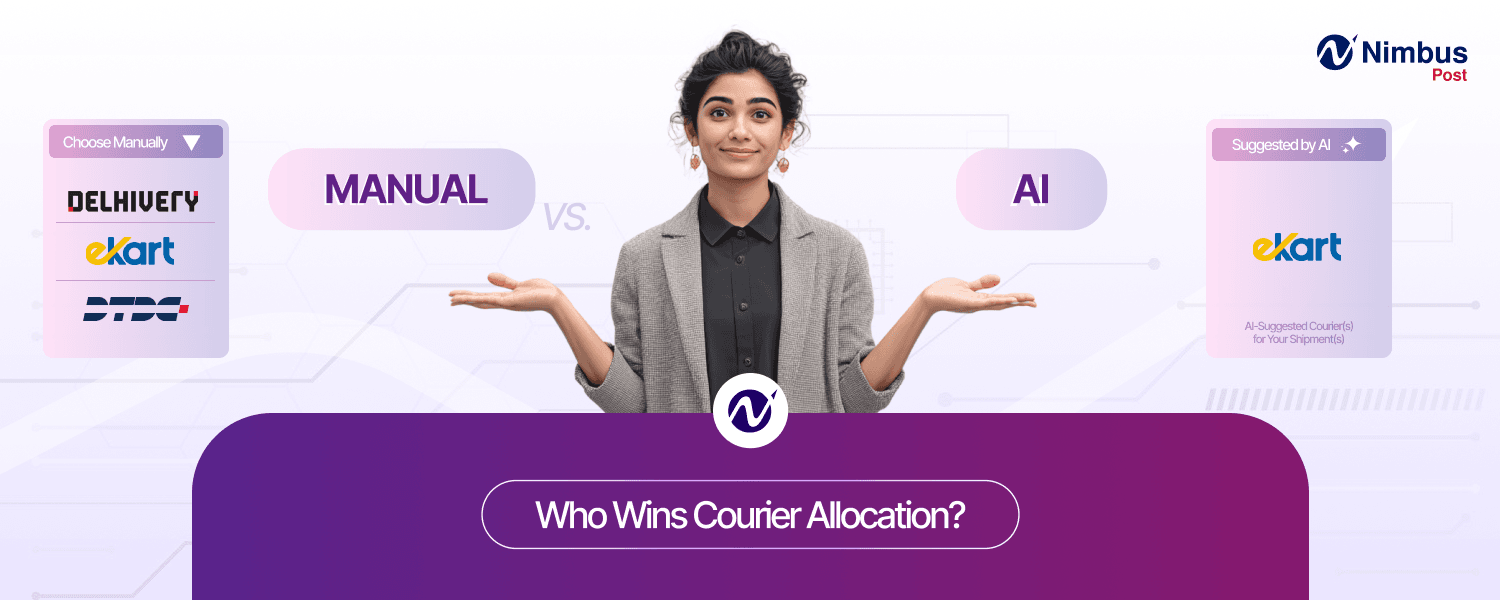
Every eCommerce seller knows this moment. You’ve got orders to ship, multiple courier partners to choose from, and a ticking clock. The question is, which courier to assign? The cheapest? The one you’ve used before? Or the one that claims faster delivery? Manual courier allocation might feel straightforward. But in reality, it often means guesswork, lost time, and hidden costs. With eCommerce competition rising, sellers can’t afford trial and error. That’s why the conversation around AI-backed smart courier allocation is getting louder.
This blog explores how manual courier allocation stacks up against AI-driven courier allocation, and why the shift could mean higher savings and better delivery outcomes for your business.
Courier allocation is the process of assigning a shipping partner to each order. It might sound simple, but behind every decision are variables like:
Choose the wrong courier, and you could end up with higher costs, delayed deliveries, or even non-serviceable shipments. Choose right, and you win customer loyalty, save on shipping, and grow faster.
Most sellers start with manual courier allocation. Here’s what it usually involves:
Time-Consuming: Sellers spend hours comparing rates and serviceability across couriers.
Limited Visibility: It’s nearly impossible to track which courier is performing better in real time.
Guesswork-Driven: Decisions often depend on habit, not fresh data.
Hidden Costs: A courier may look cheaper, but it can cause RTOs or delays that cost more in the long run.
Manual allocation might work when order volumes are low. But once you scale, inefficiencies pile up quickly.
AI courier allocation uses advanced algorithms and machine learning to assign the most suitable courier for every shipment. Instead of guesswork, it processes massive amounts of data in seconds to recommend the best match.
An AI-backed smart courier allocation engine evaluates factors like:
This means data, not assumptions, backs your courier selection.
| Factors | Manual Allocation | AI Courier Allocation |
| Decision Basis | Seller’s logic, cost-focused, and past experience | Data-driven, dynamic, real-time performance |
| Time Spent | High, especially with multiple couriers | Minimal, using the automated solution |
| Coverage | Limited, due to the seller’s knowledge | Helps expand reach with granular pin code checks |
| Delivery Success | Inconsistent, difficult to predict | Optimized through continuous performance tracking |
| Cost Savings | May save upfront, but give hidden costs later | Balances the overall cost for net savings |
High delivery success: Delayed or failed deliveries hurt your brand more than you realize. AI ensures the courier with the highest success rate for that shipment type and pin code gets to do the job.
Cost Optimization Beyond Visible Rates: Lowest rates don’t always mean the lowest shipping cost. Delays, RTOs, and failed COD attempts are the major reasons to eat into margins. Using AI lets you balance the delivery success and cost, ensuring you actually save.
Wide Delivery Reach without Assumptions: Different couriers classify their shipping zones differently. A delivery route considered “metro-to-metro” by a courier may be “metro-to-non-metro” by another courier. When you have an AI and ML backed smart courier allocation system, you don’t have to keep track of such things, as the system already knows.
Real-time Insights: Markets change daily, and it’s nearly impossible to predict a courier’s recent performance on your own. A courier partner that performed well six months ago for you might struggle today. AI, on the other hand, keeps track of the latest hub-level data so you always make informed choices.
While AI is a smart and cost-effective courier selection method for sellers, one of the biggest concerns you may have is losing control. Will AI dictate every decision? The reality is different. AI courier allocation doesn’t remove your control; it strengthens it.
Think of it as a recommendation engine. You can follow its suggestions or stick to your manual choice. Over time, as you see the results such as higher delivery percentages, fewer failed shipments, and consistent savings, you’ll understand the power of data-driven courier allocation.
The logistics industry is rapidly moving toward automation and AI-powered decision-making. With eCommerce volumes growing year after year, manual courier allocation will soon feel outdated. Sellers who adopt smarter systems early will enjoy:
Companies like NimbusPost already enable sellers with tools that help them calculate shipping rates, streamline courier allocation, reduce costs, and improve delivery outcomes with same-day and next-day delivery, and storage and fulfillment services. By adopting such solutions, you prepare your business for the future of shipping.
Manual courier allocation might work when you’re just starting out. But as orders grow, the cracks show. Missed deliveries, wasted time, and hidden costs pile up quickly.
On the contrary, AI-driven smart courier allocation gives you a clear edge. It’s faster, more reliable, and built on billions of data points you could never process manually. Most importantly, it helps you balance what matters most: customer satisfaction and cost savings.
If you’re serious about scaling, the choice is clear. Smarter courier allocation powered by AI is not just an upgrade. It’s the future of how shipping partners perform for a business.