Supply Chain Management in eCommerce
Ever felt your eCommerce business is a hamster wheel? You’re finding great products and making sales, but something still feels off. […]
 Exciting Offer: ₹600 FREE Shipping Credits on 1st Recharge of ₹1000. Code: FLAT600 *T&C ApplyView More Offers WELCOME BONUS: Enjoy FREE Inventory Storage for 15 Days. *T&C ApplyGet Started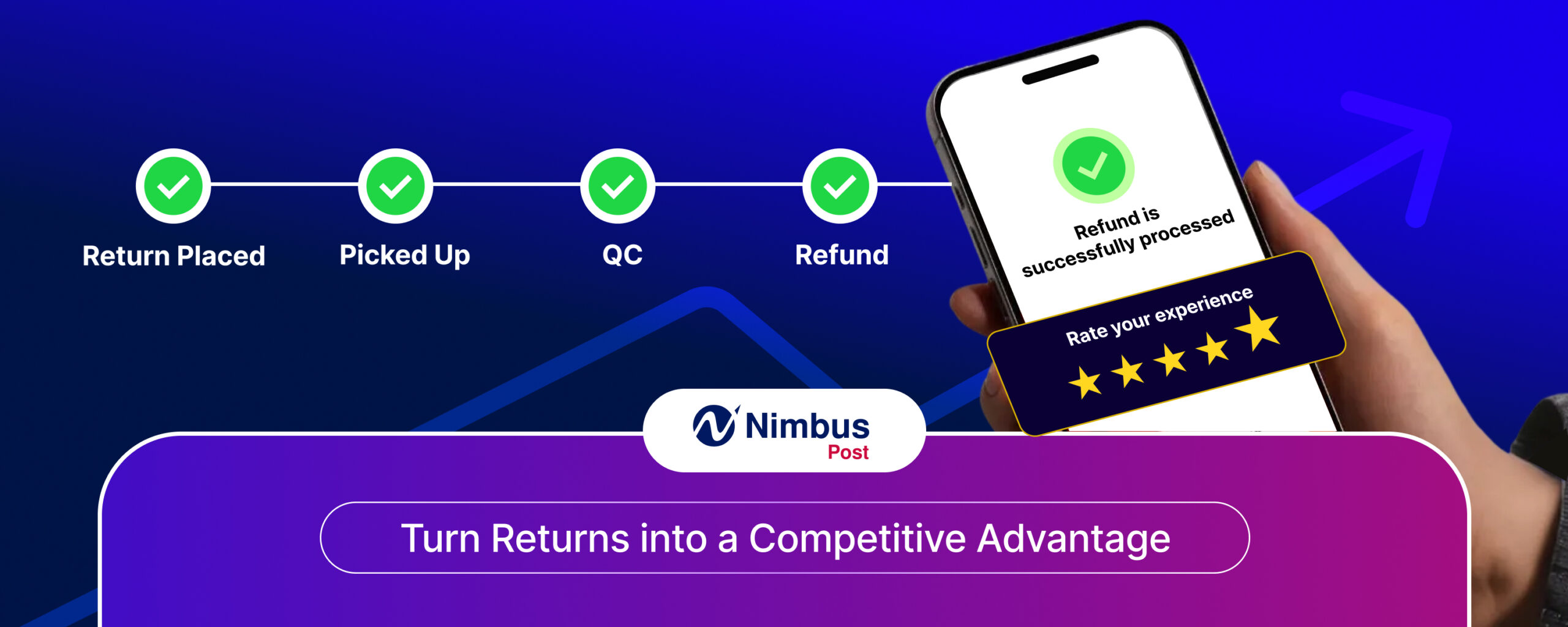
For a long time, many eCommerce brands have seen returns as a necessary evil. Something to manage quietly, reduce costs on, and move past as quickly as possible. That way of thinking no longer works, and, in many cases, it actively holds brands back.
In 2026, reverse logistics sits right at the center of customer experience, profitability, sustainability, and operational decision-making. Brands that still treat it as a backend function are quietly losing margin and customer trust. Those who take it seriously are turning it into a real, lasting advantage.
This change is also visible at the market level. A report from IMARC Group estimates that India’s reverse logistics market was valued at $33.2 billion in 2024 and is expected to grow to $57.54 billion by 2033 at a CAGR of 6.3%. That scale of growth makes it clear that returns are no longer a peripheral part of eCommerce. They are becoming central to how the industry grows and competes.
This guide is not about cutting returns at any cost. It focuses on why reverse logistics has become so important, what has changed in recent years, and how modern eCommerce businesses can turn returns into a strategic asset instead of a recurring headache with an efficient reverse logistics solution.
eCommerce has reached a point of maturity. Faster shipping, same-day delivery, and endless choice are now expected. What customers remember is how a brand shows up when things do not go as expected.
Returns are often where those moments happen. While they are a core part of eCommerce operations, they also give brands a real opportunity to improve the customer experience. When handled with care, returns can build trust and confidence instead of frustration.
Acquiring new customers has become far more expensive, which makes retention, repeat purchases, and long-term value critical. One bad return experience can undo days of marketing effort and push a customer away for good.
Reverse logistics, therefore, is not just about moving products back. It is about protecting trust at the most fragile moment in the customer journey.
A DHL study shows that 92% of global shoppers return up to 30% of their online purchases, making returns a routine part of eCommerce. It reflects how eCommerce has scaled and how shopping behavior has changed.
With the increasing popularity of online shopping, customers prefer to explore new brands, test different sizes or alternatives, and order them knowing that they will be able to get a refund in case something goes wrong. This is particularly so in fashion, lifestyle, and D2C, where decisions are frequently made on the basis of a picture but without physical examinations.
eCommerce growth has also expanded beyond metro cities. As brands reach new regions and customer groups, differences in sizing, delivery conditions, and expectations naturally increase, leading to higher return volumes.
Reverse logistics has traditionally been viewed in a rather narrow way. It was merely the reverse flow of the products from the customer to the seller. That definition is not entirely true in 2026.
Modern reverse logistics is all that occurs when a customer chooses not to retain a product. This involves initiating the return, finalizing the refund, verifying the quality of the products, determining whether the product can be resold or should be disposed of, and utilizing the data of the returns in order to enhance operations in the future.
A mature reverse logistics system answers questions such as:
Once these questions are addressed in a systematized way, returns cease to be chaotic and begin to become predictable.
Reverse logistics is not a single process. As a matter of fact, it entails a number of various flows, each of which has a given purpose within the supply chain. These flows can assist brands in developing workable return systems.
This is the most common and visible form of reverse logistics. The reason why customers return the products is due to their size, damage, the wrong product, or a change of mind. It takes doing it well to have fast pickups, fast refunds or exchanges, and the message at each point.
RTOs happen when deliveries fail, and products are sent back before reaching the customer. These are usually linked to address errors, cash-on-delivery refusals, or courier issues. Although RTOs are often grouped with returns, they are driven by very different factors. Managing them well is especially important in markets like India.
In some cases, it makes more sense to send returned products directly to resale partners, liquidation channels, or bulk buyers. This reduces storage costs and helps brands recover value faster instead of letting inventory sit idle.
When the products cannot be resold or refurbished, they have to be recycled or disposed of in a responsible way. This aligns with sustainability objectives and aids the brands to remain compliant, particularly those that deal with electronics, packaging, and consumables.
Many eCommerce brands collaborate with a reverse logistics partner in order to handle one of the flows or several of them. The company finds the right partner that introduces infrastructure, technology, and experience that can be a challenge to internalize.
As return volumes grow, the question is no longer whether brands will deal with returns. The real question is how well they handle them.
In 2026, reverse logistics has a direct impact on three key parts of business performance. First, it shapes customer trust. A return experience that feels smooth and predictable reassures customers that the brand will support them when things do not go as planned. This directly influences repeat purchases and long-term loyalty.
Second, reverse logistics is affecting profitability by a far larger extent than many brands expect. Ineffectively managed returns translate to increased operating expenses, sluggish refunds, stock lying idle on shelves, and unnecessary write-offs.
Conversely, well-structured return processes can enable the brands to reclaim value by enabling them to be restocked faster, resold, or refurbished.
Third, reverse logistics contributes to more sustainability and compliance. With the mounting pressure to minimize waste and enhance supply chain visibility, the reverse flow has become a necessity so that waste is reused, recycled, and disposed of in a responsible manner.
Concisely, reverse logistics has made its way out of being a support aspect. It is now something strategic. Brands that reinvest in the appropriate processes, partners, and technology are not merely returning the money back. They are developing a more robust and sturdy supply chain.
Many brands think returns are expensive mainly because of return shipping. In reality, shipping is only the part you can easily see.
The higher cost comes from everything that happens after the package is picked up. Returned items often sit untouched for days or even weeks waiting to be checked. Refunds get delayed, which leads to more customer complaints and frustration. Products miss the best time to be resold and eventually have to be written off. At the same time, teams do not have a clear view of why returns are happening, so the same problems show up again and again.
What makes this harder to catch is that these costs are scattered. They show up across operations, finance, customer support, and marketing, instead of in one clear place. As a result, reverse logistics often does not get the attention it deserves.
Brands that take a closer look at their return flows are often surprised by how much returns are eating into margins, far more than they initially expected.
In such markets as India, returns are commonly combined with RTOs, or Return-to-Origin. While they both deal with the flow of products going back, they are highly different issues. The RTOs mostly occur due to the failure of deliveries. This may be due to providing wrong addresses, unavailability of customers, or cash-on-delivery orders. On the other hand, returns occur after delivery. These are initiated by the customers and are also strongly related to expectations, experience, and trust.
This difference matters because the fixes are not the same. Reducing RTOs depends on better address checks, the right courier partners, and clear communication before delivery. Improving reverse logistics depends on better product information, quicker refunds, smarter routing, and clear return rules.
When brands treat RTOs and returns as the same issue, they usually end up with partial solutions that solve neither well.
Reverse logistics does not start when a product is shipped back. It starts much earlier, with clear policies. Customers should not have to hunt for return terms, struggle through complex language, or worry about hidden conditions. In 2026, clear and fair return policies are not a bonus. They are expected.
Control matters just as much. Customers desire to initiate returns themselves, select pickup time, monitor progress, and understand precisely when they will get a refund or a replacement.
Brands that delay refunds to protect cash flow often underestimate the long-term impact. Customers may tolerate a delay once, but they rarely forget it. A return experience that is fast and predictable builds more loyalty than many marketing campaigns ever will.
As soon as a product has made a journey back, real work starts. Not every returned item should be handled in the same way. Some can go straight back into stock. Others may need repairs, resale through a secondary channel, or proper disposal. Sending everything back to one central warehouse is often the slowest and most expensive choice.
Modern reverse logistics solutions work better when returns are routed intelligently. Each item should be sent to the right place based on its value, condition, location, and chances of resale. This cuts down unnecessary movement and helps recover value faster.
Quality checks also need to improve. Manual inspections slow teams down and lead to uneven decisions. Clear grading standards, supported by simple automation and proper records, help teams act faster and more consistently.
The sooner a returned product is checked and processed, the more value it keeps.
The idea that every return means a loss no longer holds true. Many brands are now finding ways to earn from returns through more thoughtful recovery strategies.
Open box products, refurbished goods, and secondary markets are now becoming actual sources of revenue. Some of the brands even send returned products directly to resellers, bypassing their own warehouses.
It is a matter of speed and purpose. Any product that is unmoved soon will lose its value. A product that is put back into the market quickly, even at a discount, often recovers a large part of what it was originally worth.
When reverse logistics is designed well, it stops being a cost drain. It becomes a system that helps recover value instead of losing it.
At scale, reverse logistics cannot be handled manually. Today, brands rely on unified platforms that bring forward and reverse logistics into one clear view. This makes it easier to track courier performance, monitor turnaround times, control costs, and spot bottlenecks without jumping between systems.
Many 3PL reverse logistics platforms support this by letting brands manage shipping, returns, and analytics together. This becomes especially important as return volumes begin to match forward shipments and streamline the whole reverse supply chain.
At NimbusPost, this unified approach helps eCommerce brands manage forward shipping and returns through a single interface, improving visibility across carriers and return flows without adding operational complexity.
More advanced reverse logistics services also use data to spot patterns before returns happen. Trends linked to specific products, locations, payment methods, or customer groups help brands act early. In some cases, this even prevents returns before they occur.
Sustainability has ceased being a marketing slogan. Investors, regulators, and customers now want real action that can be quantified. Reverse logistics in the supply chain plays an important role in making that happen.
Handling return logistics efficiently helps reduce waste, cut down unnecessary transport, and support more circular ways of doing business. Brands that are reselling, refurbishing, or recycling products responsibly are not only lowering costs but also preparing themselves for growing regulatory pressure.
Despite growing awareness, many eCommerce businesses continue to repeat the same mistakes:
These errors are not hard to remove. All it needs is just intentional system design that delivers every time.
In the future, eCommerce reverse logistics is likely to be more localized, rapid, and intelligent. The early indications are doorstep resale decisions, instant exchanges without warehouse returns, and stricter accountability around waste management. Over time, returns will shift from being reactive processes to predictive systems. The brands that set in early will be ahead of the competitors as well as regulators.
Every return carries information. It reveals something about the product, the way it was described, the delivery experience, or what the customer expected. Brands that pay attention to these signals get better over time. Brands that ignore them keep paying the same price again and again.
In 2026, reverse logistics in supply chain management is no longer about damage control. It is about having control, clarity, and confidence in how returns are handled. Brands that truly master it will not just reduce losses. They will turn returns into one of their strongest advantages.
At NimbusPost, the focus is on helping eCommerce brands build reverse logistics systems that can scale with growth while still protecting the customer experience. Brands that invest early will not only handle returns more effectively. They will turn returns into one of their strongest competitive advantages.