Aramex Courier Tracking, Customer Care and Everything You Need to Know
Aramex, established in 1982, has crafted its unique narrative, growing from a fledgling startup to a renowned international courier and a comprehensive […]
 Exciting Offer: ₹600 FREE Shipping Credits on 1st Recharge of ₹1000. Code: FLAT600 *T&C ApplyView More Offers WELCOME BONUS: Enjoy FREE Inventory Storage for 15 Days. *T&C ApplyGet Started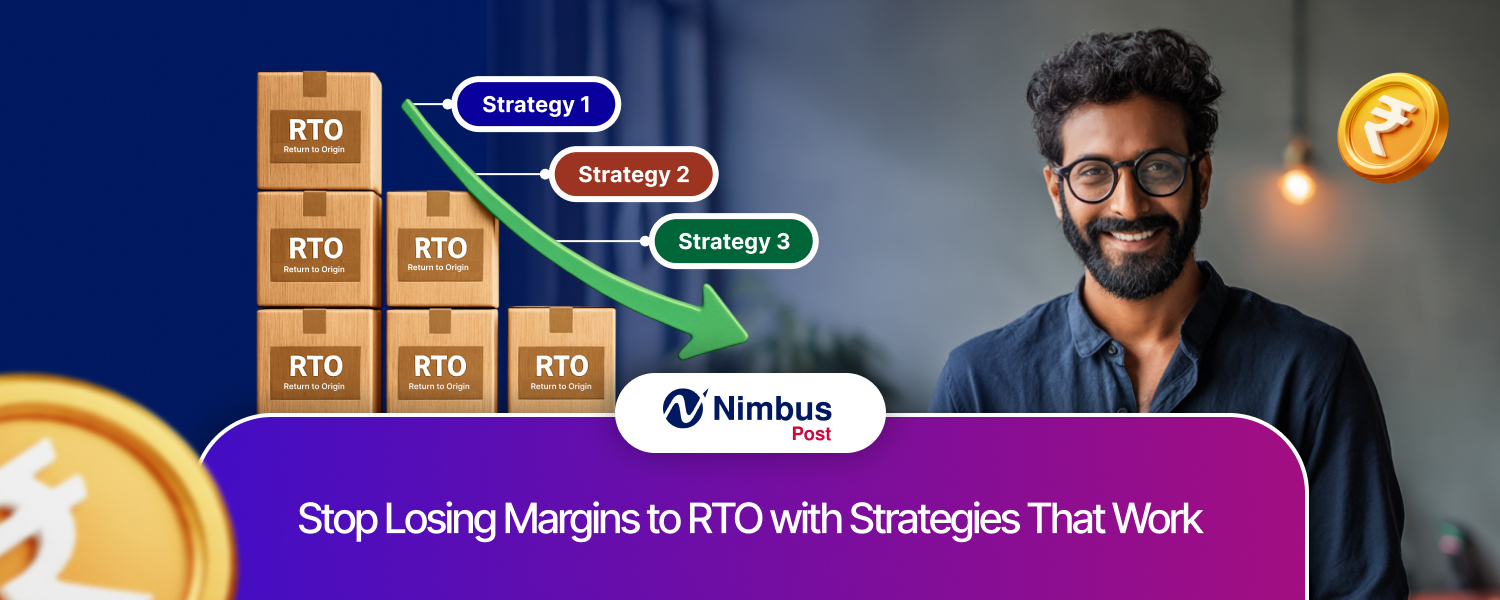
Online shopping rules India. The eCommerce market is projected to grow to US$345 billion by 2030. But failed deliveries hit every seller hard. Nearly 99% of stores face return-to-origin (RTO) issues on some orders, with nearly 25% seeing over 10% of shipments bounce back in the apparel segment alone.
These RTO headaches drain cash and shatter customer trust. Costs pile up fast due to reverse shipping, repacking, and lost inventory. You lose considerable margins per RTO order. It’s time to reduce your RTO rates and lock in loyal repeat buyers.
RTO hits when couriers return undelivered parcels to you. An NDR (non-delivery report) flags that as the first failed attempt. Wrong address, absent buyers, and bad timing spark them all.
Cash flow churns hard. Each returned order costs 2-3x outbound freight. NDR alerts waste time on follow-ups. Buyers ditch brands after one bad experience, with over 50% of customers abandoning carts post a failed delivery experience.
Indian eCommerce RTO averages about 20-25%, with fashion and electronics topping the list at 35%. Cash-on-delivery (COD) further worsens it to 40%. Poor tracking fuels these cases significantly, and sellers face the outcome without live visibility. You can reverse the damage by opting for smart strategies.
Let’s find some practical fixes that tackle real seller headaches. Reduce failed deliveries, save cash on returns, and build customer trust with smarter shipping from day one with these RTO-reducing solutions.
COD orders haunt every seller as buyers place orders and then ghost at the time of delivery. You ship, they reject, which basically leads to vanishing cash. Right after receiving an order, you should confirm the customer’s intent via call or WhatsApp. Further, risky pin codes burn you too, as most deliveries fail in some areas due to various reasons. It’s smart to block such pin codes right away with the help of your shipping partner.
Key actions to stop wasting money in these areas:
Here, NimbusPost’s NDR support team jumps in to prevent high RTO for your business. They handle follow-ups when confirmations fail via IVR and WhatsApp. Ghost orders disappear, and your cash flow finally stabilizes.
Picking the wrong courier based on its national performance reputation or because it’s the cheapest option available often leads to an exploding RTO. A wrong courier can lead to stacking delivery delays and multiple failed attempts. You need a smart AI tool that crunches data points and considers courier performance based on various factors like origin-to-destination pin code combos, product categories, payment modes like COD/prepaid, and even seasonal trends. They prioritize fresh data over old stats, which makes them even more relevant for an online seller.
For example, picture this: For your Mumbai-to-Pune apparel COD shipment, AI spots that Delhivery nails 95% success there during monsoons, whereas XpressBees struggles at 70%. It picks the winner automatically.
How these tools work:
So, forget the gut calls, let your deliveries land on the first knock, drop shipping costs, and delight customers with every order. Here’s more on the hidden cost of choosing the wrong courier partner, which you should know before choosing one manually.
Blind shipments breed RTO disasters, while real-time tracking helps prevent them. Live order tracking helps you see exact parcel locations and delays instantly, which means you can act before NDR hits. With live shipment tracking, you can track every mile, spot “stuck at hub” issues early, and notify your buyers proactively.
NimbusPost shines here. Its dashboard unifies 25+ couriers. You get instant status updates while sharing branded tracking links. Customers stay looped in without support calls.
Timing kills more deliveries than distance. Buyers miss parcels during work hours. Couriers rush past gates. Result? Instant NDR.
Various factors determine a shipping company’s transit time, such as service type, home delivery area, local pickup schedule, and so on. Pick reliable shipping partners offering solutions like EDD visibility, same-day delivery, and next-day delivery. Factor in pin-code realities along with shipping zones to always deliver on time.
You can boost delivery success with these moves:
Some customers may not be comfortable with the idea of giving access to their home address to a delivery person or courier company. Therefore, opting for safe alternatives like office locations can work as a good RTO reduction technique.
Transparency is essential for businesses and customers, as it builds trust and reduces suspicion and RTO percentage.
Share everything upfront. Share real-time tracking information with your customers via email and SMS to help them keep track of their orders. Displaying the return policy and product warranty information clearly also strengthens trust with your customers. Knowing what to do if an order fails to arrive on time, becomes damaged, or gets lost in transit builds customer confidence and reduces RTO significantly.
Following are the best transparency tactics you can adopt:
NimbusPost automates this flow with automated NDR support based on customer feedback, boosting your delivery performance. Your customers have the option to reschedule their delivery and update their address and mobile number, which further helps boost your delivery performance and reduce RTO percentage.
Letting customers reschedule delivery if the order doesn’t get delivered on the first attempt helps reduce RTO. Following up with customers via WhatsApp and IVR calls helps ensure customers don’t miss out on receiving orders and boosts your delivery success percentage.
RTO in logistics feels like a relentless cash drain, doesn’t it? You’ve poured effort into building your store, only to watch margins vanish on ghost orders and failed knocks. But here’s the good news: you don’t have to live with 30-40% RTO eating your profits. Real-time tracking, order confirmations, shipment transparency, and AI courier picks turn these hassles into wins. NimbusPost pulls it all together with same-day deliveries, one dashboard with multiple couriers, automated confirmations via WhatsApp and IVR, and pin code-perfect partner recommendations for all shipments. Start small with one fix today. Watch your first-attempt deliveries climb, support tickets drop, and loyal customers stick around because your brand deserves that edge. Ready to reclaim those margins? Sign up today.
RTO in logistics means Return to Origin. It happens when a courier partner returns undelivered parcels to your warehouse after failed attempts. Common triggers include wrong addresses, absent buyers, or bad timing. Sellers face reverse shipping costs and lost inventory due to RTO.
Return to Origin. It happens when undelivered parcels return to the seller instead of retrying delivery, doubling your shipping costs.
Ghost COD buyers top the list, as they place the order and vanish at the time of delivery. Risky pin codes with poor access follow. Wrong or incomplete addresses, work-hour deliveries, and wrong courier choices drive most failures.
Reverse shipping fees (often 2x forward rate), repacking costs, and inventory holding charges, plus COD collection losses. Typically, RTO charges hit about 15-30% of the order value.
Confirm COD orders via WhatsApp or IVR first. Block high-failure pin codes. Use AI courier engines for smart picks. Real-time tracking catches issues early. These reduce RTO dramatically.
Non-Delivery Report. First failed delivery attempt gets flagged as NDR. It triggers follow-ups like reattempts or returns. Quick action on non-delivery reports prevents RTO.